
How to Choose a Personal Trainer (Without Wasting Your Time and Money)
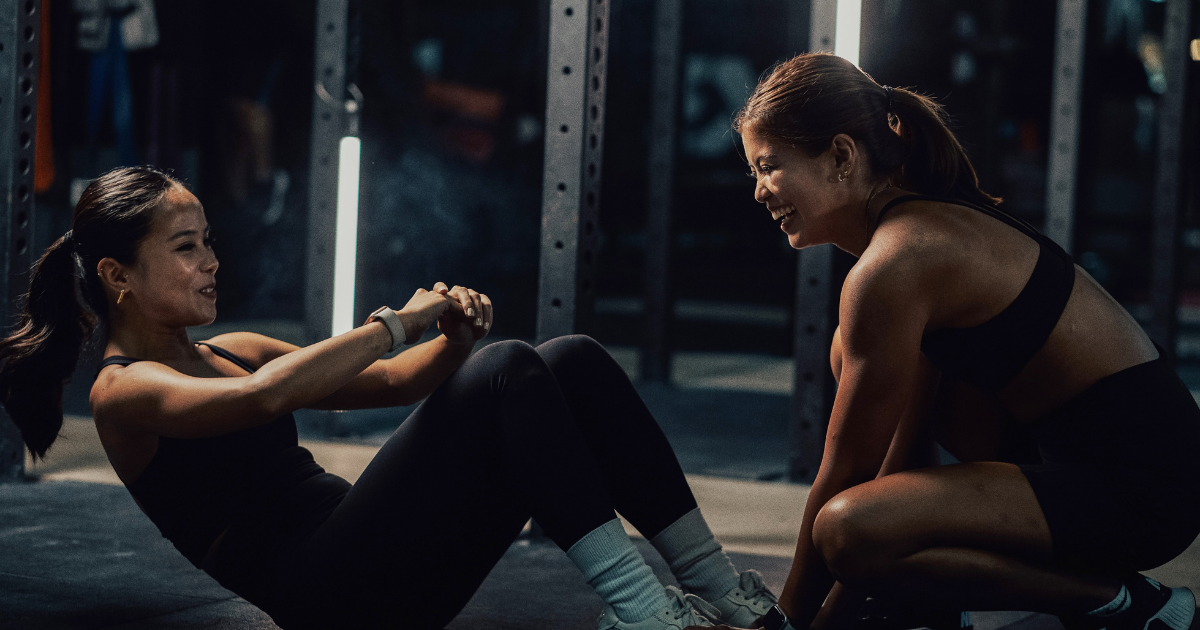
Working with a personal trainer is one of the smartest investments you can make for your health and fitness. The right trainer will get you results faster, with fewer setbacks, and without the frustration of having to start over because of early mistakes.
But knowing how to choose a personal trainer? That's the more difficult part. Moving from decision to action brings its own challenges.
The good news is that personal trainers are widely available. This is mainly because, unlike most health professions, the entry requirements for becoming a personal trainer are comparatively minimal. There is also limited regulatory oversight or formal quality assurance once trainers are certified.
This regulatory context will be discussed in greater detail later, but for now, know that while prospective clients have plenty of choice, the quality of trainers varies considerably. Taking the time to get this decision right is essential.
How Do People Usually Choose a Personal Trainer?
Understanding common approaches can clarify where to start. There are a couple of ways that we typically go about finding the best personal trainer. A referral is the most common starting point. Someone you know uses a trainer, gets results, and passes the name along. That combination of proximity and a trusted recommendation is hard to argue with. Next comes search, social media, or word of mouth. You've done your homework, seen their content, and you like their training style; they seem to know what they're talking about. Fair enough. Others go with whoever has availability at their gym and don't ask questions. That isn't exactly wrong either. Sometimes getting started is the hardest part, and imperfect action is a way through that.
Some choose PT based on how they look, operating on the logic that a great physique must mean they know what they're doing. Also, more on that later.
All of these approaches have worked for someone, but how do we really narrow it down? To find the right personal trainer for you, we have to go deeper.
What Do You Actually Want From a Personal Trainer?
Before you evaluate a single trainer, it's worth spending a few honest minutes on yourself.
Most people start this process with a vague goal and a rough idea of how many sessions they can afford. That's a great starting point, but it's not enough to make a good hiring decision. The clearer you are about what you want, the easier it becomes to find a good personal trainer who is genuinely equipped to deliver it.
Start with the goal itself. Weight loss, building strength, improving fitness, recovering from injury, training for a specific event, or simply moving better and feeling less terrible after a day at a desk. These are all different fitness goals, and not all trainers will approach them the same way. If your goals are sport or performance-related, a fitness coach with a strength and conditioning background will serve you far better than a generalist. If you're managing an injury or a health condition, you need someone with rehabilitation experience, not just a good program template. A good trainer should and will tell you as much.
Then think about what you actually need from the relationship. Do you need somebody to help keep you motivated, or are you more of a self-starter who wants direction and accountability?
Some people want a coach who pushes hard and holds them accountable without much conversation. Some want a template, NASA-level data collection and a place to show up to with a quiet corner for uninterrupted burpee circuits. Others need encouragement, patience, and a trainer who checks in on how they're feeling before loading the bar. Neither preference is wrong, but a mismatch in style is a big reason why people quietly stop attending. For instance, a client seeking empathetic support may feel discouraged and disengaged if paired with an assertive, high-intensity trainer, ultimately leading them to discontinue sessions.
Let's not do that. Your fitness path deserves clarity, and without that honesty first, you may never achieve your goals.
It's also worth being upfront about constraints:
- How many sessions per week can you realistically commit to, and sustain, not just in week one?
- What's the best time to train for you, and is that availability consistent?
- Where do you want to train: a gym, outdoors, at home, or online?
- Do you need additional support for a fitness routine outside of the gym, by yourself?
- Do you have any injuries, health conditions, or physical limitations a trainer needs to know about?
- What does your budget actually allow for over three to six months, not just the first few weeks?
You may not have answers to all these questions before your first session, and that's fine. Working with what you have right now helps you hire a personal trainer based on fit, and not just timing.
What Does a Personal Trainer Expect From You?
One last thing worth considering before you start the search. A good trainer will have expectations of you, too. They'll ask for honesty about how you're feeling and coachability. That last part matters a lot more than most people expect. If you're ok with being challenged, corrected, and occasionally told that what you're doing isn't working, you'll get far more out of the relationship and generally get better results. If you're not quite there yet, that's worth knowing before you book.
One question worth sitting with before any consultation: Do you understand what it will actually take to reach your goal, and are you in a position to meet those demands? A good trainer will be honest with you about this from day one. If you go in with some clarity of your own, that first conversation will be a lot more useful for both of you.
Going a step further, check in on where you are right now, not just where you want to be. What's your current fitness level? How motivated are you at this exact moment, honestly? The early sessions with any trainer are typically lighter than you might expect. They will first assess your fitness and history. If you're new, there will be a movement learning phase, a gradual build before the real work kicks in. For some people, that's reassuring. For others who come in fired up and ready to be destroyed in session one, it can feel underwhelming. Neither reaction is negative, but knowing your own expectations going in means you won't misread a competent, methodical trainer as someone who isn't pushing you hard enough.
What Qualifications Should a Personal Trainer Have?
The minimum qualification to work as a personal trainer in Australia is a Certificate IV in Fitness. That's the baseline, and it's worth understanding what it actually represents before you read too much into it.
A Certificate III qualifies someone to work as a gym instructor or group fitness instructor — they can run classes, supervise floor sessions, and guide people through equipment in a structured gym setting. What they cannot do is design and deliver individualised one-on-one training programmes. That requires the Certificate IV. If you're hiring someone for personal training, Certificate IV is the minimum credential you should accept, full stop.
The Certificate IV itself can be completed online, in as little as a few weeks, through fast-track providers. That doesn't make it worthless; the content covers programme design, client assessment, health screening, and safe exercise prescription. But it does put the certification in perspective relative to, say, a four-year allied health degree.
What About Governing Body Registration?
Fitness registration in Australia is not a legal requirement. Bodies like AUSactive, Physical Activity Australia, and FITREC are fitness organisations, not government regulators. Many gyms and fitness businesses require registration as a condition of employment, and it does serve as a useful signal that a trainer has met a baseline standard and carries appropriate insurance. But registration alone is not a reliable quality marker. It confirms compliance, not necessarily competence.
It's also worth knowing that there are commercial relationships between certification providers and these registration bodies, and the ongoing education requirements to maintain registration — typically called Continuing Education Credits — are generally a low bar. Meeting them does not mean a trainer is actively developing their skills within the fitness industry.
Does a University Degree Matter for Personal Training?
A degree in Exercise Science or Human Movement is a genuine mark of deeper theoretical knowledge — anatomy, physiology, biomechanics, and evidence-based programme design at a level a Certificate IV doesn't reach. For clients with complex needs, chronic health conditions, or performance goals, a degree-qualified trainer or an Accredited Exercise Physiologist (AEP) is often the more appropriate choice.
That said, a degree is not a guarantee of excellence in the practical, human side of personal training. Coaching is a skill built through experience, feedback, and genuine caring about client results. Some of the most effective trainers in the industry hold a Certificate IV and nothing else. Some of the least effective hold postgraduate qualifications. The degree shows there is a higher level of formal education, but it tells you nothing about how well someone actually coaches.
When Do You Need a Specialist Instead of a Generalist?
Something worth knowing: a Certificate IV in Fitness is a generalist qualification by design. It covers general population health and fitness, and that's the limit of its scope. Any trainer who markets themselves as a specialist in rehabilitation, prenatal/postnatal training, sport performance, or chronic condition management should hold a formal qualification in that specific area, not just an interest in it or a weekend workshop. Specialisation in fitness is not a branding choice. It's a scope of practice. Ask for the credentials.
With that in mind, here is when a generalist personal trainer is not the right starting point:
- Injury rehabilitation or chronic pain: You need an Accredited Exercise Physiologist (AEP), who holds a university degree and is qualified to work with injury and chronic disease, not a PT who "has experience with bad backs" or "rehab coach".
- Pre/postnatal training: A formal pre/postnatal certification is a must here, not optional. The physiological demands and contraindications in this space are specific and consequential.
- Sport or athletic performance: Look for a trainer with formal strength and conditioning credentials, ideally through the Australian Strength and Conditioning Association (ASCA).
- Older adults, falls prevention, or age-related health conditions: Seek a trainer with specific older adult or active ageing qualifications, or again, an AEP.
- Mental health or disordered eating history: A trainer should be aware of this space and ideally work in conjunction with a relevant health professional, not operating independently within it.
If your goals are general — lose weight, build fitness, get stronger, get in shape, feel better — a well-qualified generalist PT is perfectly appropriate. But if your situation is specific, your trainer's qualifications should be too.
If you have existing health conditions, a history of injury, or have been inactive for some time, talk to your doctor or medical team before you start. They can point you in the right direction from the beginning. Maybe they have a trusted network of potential trainers that they work with.
How Much Experience Should a Personal Trainer Have?
The personal training industry has a well-documented retention problem. It is commonly reported across the fitness industry that around 80% of qualified trainers leave within two years, with some estimates putting the average active career span closer to six to twelve months. What that means practically is that a trainer with five or more years of consistent, client-facing experience is already in a small minority, and that alone is worth noting.
Years in the industry matter, but not because time automatically produces quality. It matters because personal training is fundamentally a learn-on-the-job profession. The gap between what looks correct on paper and what actually works in real training sessions, with a real person, in a real gym, with limited equipment and variable energy levels, only closes through accumulated experience. Textbook programming is not the same as practical coaching, and no qualification fully bridges that gap. Experience does not guarantee excellence. It does, however, make it more likely.
That said, experience without growth is just repetition. A trainer who has been running the same program template for a decade, never updated their methods, and stopped learning somewhere around year three is not more valuable than a newer trainer who is current, engaged, and invested in their client's progress. Longevity in the industry is a positive signal, but it's not a guarantee.
What you're actually looking for is experience that is relevant to your specific goal. A trainer with ten years of experience working with elite athletes may not be the obvious choice for someone returning to exercise after having a baby. Ask directly: have they worked with clients in your situation before, and what did that look like?
Another thing worth considering is that at a time when social media has given everyone a platform and a perceived area of expertise. There is a big difference between a trainer who has spent years under the bar, on the gym floor, and in the trenches with real clients, and one who has built a following online through content performance, rather than coaching. Theoretical know-how and a confident camera presence are one thing, but experience and agility matter a lot in the fitness field when you're dealing with complex systems and human behaviour.
As a rough benchmark, five or more years of active, consistent client work is a reasonable starting point when evaluating experience. It is not a hard rule, but it filters out the majority of the industry's early-stage turnover and gives you a trainer who has absorbed enough real-world experience to know what they are doing, even if they can't know everything.
Does Your Personal Trainer Know Why They Do What They Do?
Training the human body is a science. Coaching humans is an art and science. The principles that govern strength training, how people get stronger, lose fat, recover from injury, and adapt to exercise are grounded in research and evidence. Established, though evolving evidence. Not intuition, trend cycles, or whatever is performing well on social media this month. A good personal trainer or coach understands those principles and understands the limitations of the research. Not everything that works has been formally studied, and not everything that has been studied translates cleanly to a real person in a real session. The best coaches operate in that gap — applying established principles to situations less certain, rather than waiting for a study to tell them what common sense would suggest. More importantly, they should be able to explain their reasoning to you in plain language. Why this exercise? Why this load? Why this progression? How does this help you reach your fitness goals? If a trainer cannot answer those questions clearly, or deflects with confidence rather than substance, that tells you something. Ask them early. Pick a personal trainer who can clearly articulate their approach to fitness and anchor it in fundamental principles.
And keep in mind that the ability to justify their programming is not just good practice. It is a professional and legal requirement. If a client is injured and a trainer cannot articulate why a given exercise was prescribed for that individual, they have a problem that goes well beyond a difficult conversation.
How Do You Know If a Personal Trainer Gets Results?
Let's give transformation photos their due for a moment. A well-executed before-and-after can be viscerally compelling. It makes the abstract feel achievable, puts a face to a result you want for yourself, and provides the kind of immediate, visual proof that no amount of credentials and experience, or client testimonials can quite replicate. As a motivational tool and a glimpse of what's possible, they work.
They just don't tell the whole story.
What did that person do outside of training? What did they eat, and was it sustainable? Was the result still there six months later, or did it all go south the moment the program ended? A dramatic physical transformation can be achieved through methods that no responsible trainer should be applying. A photo tells you none of that. And for anyone whose goals are performance-based, health-marker driven, or simply about feeling and moving better, a transformation photo is essentially irrelevant to begin with.
Privacy is also a legitimate concern. Not every client wants their body published on the internet, and a trainer who gets that and respects the boundary may simply have less visual evidence to show you. That is not a red flag.
What signals a track record worth trusting is a mix of factors to consider. Look for:
- Google reviews: A trainer running a professional personal training business will likely have them. Read them and spot the patterns, not the highlights. Multiple reviews describing the same qualities - communication, programme quality, adaptability, long-term progress, references to a supportive and empowering coaching style. These carry more weight than a handful of five-star ratings with no detail.
- Video content: Not production quality or follower count, but substance. Do they explain their programming clearly and educate without being too performative? Do their clients appear to be training well, using good technique, and progressing over time?
- Testimonials that describe the process: The most credible client testimonials talk about what it was actually like to work with someone week-to-week, not just the end result. If every testimonial sounds like an ad, treat it accordingly.
- Referrals from people whose goals resemble yours: Success stories or a recommendation from a friend who shares your goal, your fitness level, and your general situation are genuinely useful. A referral from someone who trained for an entirely different outcome doesn't really tell you much at all. Maybe they're really good at helping people achieve a thing that you don't want. How does that help you?
- Retention: This one is harder to measure from the outside, but it is worth asking about. Do their clients stay with them for months or years, or does there seem to be a constant rotation of new faces? Long-term client relationships are the clearest signal in the industry that a trainer consistently delivers.
A confident, established trainer will have no hesitation sharing any of this with you. If the evidence on offer is limited to follower count and not consistent proof of specific results, keep looking.
What Should Happen in Your First Personal Training Consultation?
The first consultation, whether it's free or paid, is where a good trainer earns your trust that they are the right fit for you. Your health and fitness goals should be the focus, and it shouldn't feel like a sales pitch.
A professional trainer will conduct a basic assessment, including a health screening and PAR-Q, before any physical activity takes place. They will ask about your injury history, your lifestyle, your sleep, your stress levels, and your nutrition habits, alongside your fitness goals. They may conduct some form of movement screening to understand how your body moves before deciding how to train it.
We should add that the use of formal movement screening systems had a big moment in the fitness industry through the 2000s, but the evidence base for their predictive value has weakened considerably since. The research has not consistently supported the idea that screening scores reliably predict injury risk or meaningfully direct program design for generally healthy populations. How each of us moves is extraordinarily varied, adaptive, and context-driven. It resists clean quantification. A thorough hour-long movement assessment nit-pick is not necessarily a good sign. It's certainly not one that will likely leave you confident and excited for what's to come. What you want is a trainer who observes how you move, asks the right questions, and uses that information sensibly, without treating a screening tool as a substitute for professional judgement.
You're looking for a personal trainer who will set realistic expectations about what progress looks like and over what timeframe, and remove barriers.
If a trainer skips the screening, rushes straight into a workout to impress you, or spends the consultation talking more than listening, those are not green flags. The best first consultation leaves you feeling informed, assessed, and clear on what working together would actually look like. That is what you are paying for.
How Much Does a Personal Trainer Cost?
Personal training in Australia ranges from around $60 to $200 or more per session, and that spread is wide enough to be almost meaningless without context. What you pay depends on several variables, and understanding them stops you from overpaying for the wrong reasons or dismissing a good trainer on price alone.
The main factors that move the price up or down:
- Session format: One-on-one training commands the highest rate. Semi-private sessions with two to four people drop the per-person cost considerably. Group training and bootcamp-style sessions are the most affordable entry point, though the programming is by nature less individualised.
- Location: A trainer operating out of a premium studio in an expensive suburb carries higher overhead than one running outdoor sessions in a local park. That cost gets passed on. It reflects real estate, not necessarily skill. However, a premium facility will also more than likely have a dialled-in hiring process for choosing a trainer.
- Experience and specialisation: A trainer with, say, a decade of experience and a specialist qualification in rehabilitation or strength and conditioning will charge more than a generalist two years into their career. Often, that premium is justified. Sometimes it is not.
- Mobile and in-home training: Expect to pay a loading on top of standard rates to cover travel time and the convenience factor.
- Online coaching: The most affordable format, typically delivered as a monthly programming and check-in package. Works well for self-sufficient clients who know how to train and need direction more than supervision.
- On block packages: Many trainers offer discounted rates for buying sessions in bulk, typically ten or more at a time. The saving is real, but so is the commitment. Buy a block once you are confident in the trainer, not as part of the first conversation.
On the cost-per-result question: Personal training feels expensive until you compare it honestly to the alternatives. Australians spend an average of around $756 per year on gym memberships. Half of those members attend less than once a week, with Finder research estimating that unused memberships collectively cost Australians over $2.4 billion annually. One in five gym members go less than once a month — which, at average membership rates, works out to roughly $65 per visit for the privilege of not going. That is not a cheap option. It is just a cost that arrives quietly in monthly increments rather than as a single visible number. A trainer who gets you to your goal in six months is cheaper than one who gets you halfway there in twelve, and both are cheaper than two years of gym fees you used inconsistently and without direction. Price is worth considering. It is not the most important consideration.
One thing that needs saying clearly: expensive does not mean better, and cheap does not mean worse. A high rate could be a reflection of the location, overhead, and marketing investment as much as it reflects coaching quality. Evaluate the price in the context of everything else covered in this guide, not in isolation.
Does Your Schedule Match Your Trainer's Availability?
This one gets overlooked during the exciting early stages, and it causes more dropped programs than many people realise.
The best trainer in Sydney is not the best trainer for you if they are only available at times you cannot consistently make. The idea is to remove as much friction as possible, especially in the early days. Before you commit to anyone, talk about scheduling. Not just what is available now, but what happens when your work gets busy, you travel, or life intervenes. Is there any room for flexibility? Can sessions move online when you can't make it in person? What is the cancellation policy, and does it suit you?
A trainer with a full book is generally a good sign. Many now run mixed-model offerings, combining in-person and online sessions, and the technology supporting remote coaching has improved significantly. If working with the right person means mixing formats, it is worth being open to that. It can mean more flexibility, lower cost, and in many cases, faster progress.
A few things worth confirming before you sign anything:
- What are their standard available time slots, and are those slots stable long-term?
- How much notice is required to cancel or reschedule without a penalty?
- Do they have a waitlist, and how quickly can they accommodate changes?
- What happens if they need to cancel?
A trainer who is difficult to contact, regularly runs late, has no proper system in place for billing or scheduling, or treats scheduling as your problem to manage is telling you something about how they run their business. Reliability or organisation is not a bonus quality you should look for in a personal trainer, but rather it's a baseline requirement.
Does a Personal Trainer Need to Look a Certain Way?
The fitness industry sells aesthetics. That is its primary commercial language, and personal trainers are not exempt from it. A lean physique, a strong Instagram presence, and a confident physical presentation are powerful marketing tools, and the industry knows it. But conflating how a trainer looks with how well they coach is one of the most common and consequential mistakes a client can make.
Consider what a trainer's body really tells you. It tells you about their genetics, their personal training history, their diet, and the goals they have pursued for themselves. It tells you nothing about their ability to design a program for your body, your limitations, your history, and your goals against your roadblocks. A trainer who competes in bodybuilding has optimised their own physique for a specific, highly particular outcome that has no bearing on whether they can help a 45-year-old with a desk job and a bad knee move better and lose twenty kilograms.
The research on what actually predicts client outcomes in personal training points consistently to the same factors: the quality of the relationship, communication, accountability, programme individualisation, and the trainer's adaptability when something isn't working. Physique does not appear on that list.
Some concrete examples to sit with:
- Some of the most respected strength and conditioning coaches in elite sport would not look out of place behind a desk or teaching a class. Their athletes perform at the highest level in the world.
- Exercise physiologists working in cardiac rehabilitation and chronic disease management are not selected or evaluated on how they look. They are evaluated on clinical outcomes.
- A pre/postnatal specialist does not need to have experienced pregnancy themselves or maintain a visible six-pack to understand the physiological demands of that training context.
- A trainer specialising in older adult fitness and falls prevention is not marketing to an audience that expects or needs them to look like a fitness model.
None of this means professional presentation is irrelevant. A trainer who appears visibly disengaged from their own health over a long period may signal a deeper personal issue, or it may be none of our business. Showing up to sessions looking dishevelled, unprepared, or as though fitness is something they used to care about is a reasonable thing to notice. Context matters.
But there is a big difference between a basic professional presentation and the expectation that a trainer should look like a fitness advertisement. One is a reasonable standard. The other is a marketing construct that has nothing to do with coaching quality and everything to do with how the industry has conditioned people to shop for it.
Health, fitness, and high performance do not have one shape, one size or one look. And holding anyone to impossible standards that few meet, or can meet healthily, is fragile.
Judge a trainer by what happens in the session. By whether they listen, adapt, explain, and deliver. The rest is a coat of paint.
How To Find a Good Personal Trainer Near You?
Choosing the right personal trainer is not complicated when you know what you are looking for. And you now have a ready guide for determining if a trainer is right for you.
The last question is the most practical one: where do you actually find a fitness trainer who meets it?
The most common starting points are straightforward. Ask friends and people you trust - a colleague, or someone whose results you have seen firsthand. A referral from someone whose goals and situation resemble yours carries real weight. If you already train at a gym and have built a rapport with the floor staff, ask them. They see every trainer in that facility operate day to day and will give you a more honest picture than any marketing material will.
You can also search directly on Google. A trainer running a legitimate business in your area will generally have a website, reviews, and enough of a digital footprint to evaluate before you make contact.
And then there is another option, which happens to be a personal favourite.
A dedicated personal trainer directory lets you search by suburb, filter by specialisation, read bios, check credentials, and compare options in one place — without messaging gyms or scrolling through a sea of social media samesies, hoping the algorithm surfaces someone good. It is a quicker, more structured way to find a trainer who fits what you're looking for and can help you on your fitness way to glory.
If you are based in Sydney, you are in the right place. Our directory lists the best personal trainers across every Sydney suburb, from the Eastern Suburbs and Northern Beaches to the Inner West, North Shore, and Western Sydney. Every trainer listed operates locally, so every Sydney location is covered and updated weekly.
You have two ways to use it:
- Browse by suburb: Search your area, read profiles, and shortlist trainers whose experience and approach match your goals.
- Post a job: Tell us what you are looking for — your goals and personal preferences, your schedule, your budget, your location — and let trainers come to you. It takes a minute to put out your request and put it in front of our fitness professionals.
Hiring a personal trainer is a significant investment of time, money, and trust. That makes choosing the right one worth doing properly. The trainers who deliver real results are out there in every corner of Sydney, and they want to help you. The difference between finding one and settling for one comes down to knowing what to look for before you start looking. Now you do.